Speak DIRECTLY to us and help our girls!
After 240 years of reign, the only Hindu monarchy in the world became the Federal Democratic Republic of Nepal. A few days after the king left the palace, it was transformed into the Museum Narayanhiti.
The people lived for a long time in an atmosphere of tension. There were ongoing disputes between the old monarchy and the country’s Maoist rebels, who wanted to establish a Communist regime.
Today the country is still in its infancy for a multi-party democracy, but a significant step was taken on September 20th, 2015 when the first Constitution of Nepal was promulgated. The political time is one of new beginnings.
The culture is a reflection of the ethnic diversity that makes up Nepal, however Hinduism has much influence on customs, since 80% of the population is Hindu. Buddhism also influences and blends with Hindu practices (around 10% of practitioners). Buddhism holds that the Buddha was born in Nepal.
The Nepali year begins in mid-April and is divided into 12 months. Saturday is the official day of rest. The official currency is the Nepali rupee and the language is Nepali, but English is considered a second language.
Population of Nepal is Hindu
The capital is Kathmandu. The population are more than 29 million, making Nepal one of the world’s biggest population densities – over 200 inhabitants per square kilometer.
It is considered a poor country, approximately 25.2% of the Nepali population lives below the poverty line, according to data released by the World Bank. The HDI (Human Development Index) is considered one of the lowest in the world, matching up with many African countries.
Recent statistics indicate that 69% of Nepal’s labor force is in agriculture, 12% in industry and 19% in services. The average annual income is USD 2,700 per capita.
Data according to https://www.indexmundi.com/nepal
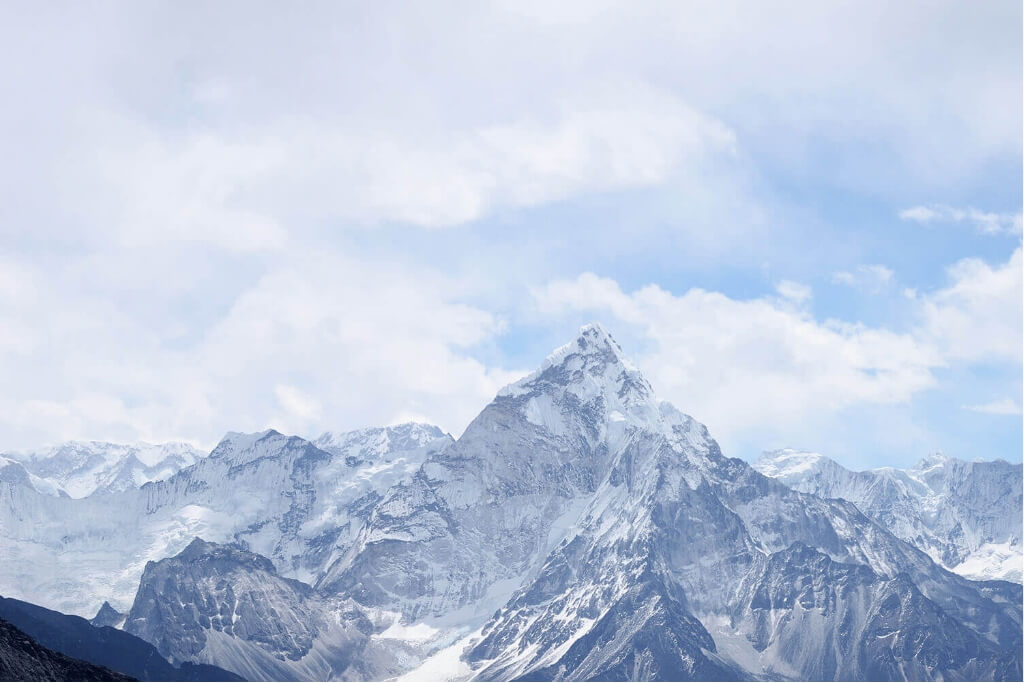
Despite its rich natural beauty, biodiversity, and the Himalayan range—home to Mount Everest—Nepal faces serious shortages of water, electricity, and infrastructure due to political and structural issues. Limited hydropower, poor water distribution, inadequate roads, and weak industrial development restrict economic growth and exports, leaving most production at a subsistence level.
Urban areas suffer from poor infrastructure, worsened by ongoing reconstruction after the 2015 earthquake. While violent crime rates are low, Nepal struggles with significant social issues such as domestic violence, child abuse, and human trafficking.